Introduction
If you are a government employee getting close to a major pension decision, you may already know the feeling.
The paperwork starts to feel real. The numbers start to matter. And somewhere in the back of your mind, the same question keeps coming up.
What if I make the wrong decision?
That was the situation Sarita found herself in after almost 38 years of service. She had reached the point where she was ready to make a decision, and at first, she thought she would resign and take everything in cash.
It sounded simple. But simple is not always safe when pension and tax decisions are involved.
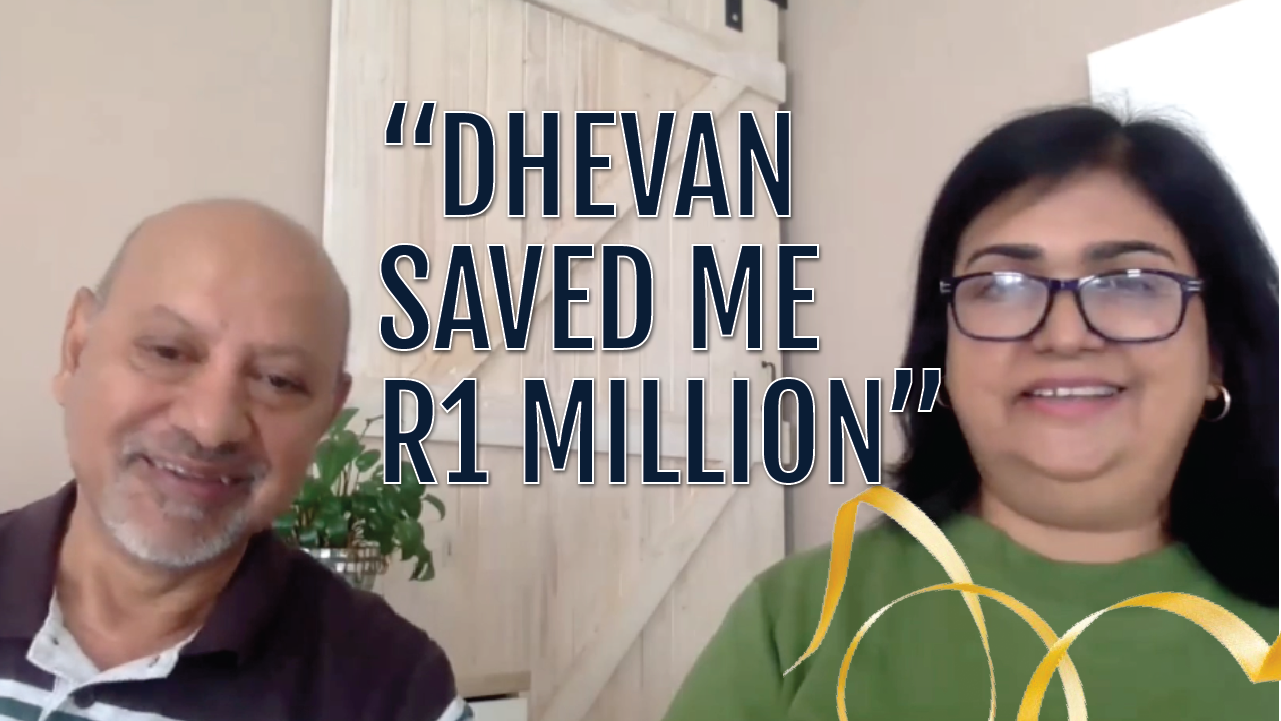
Sarita later shared that she did not realise how much the pre-1998 benefit could affect her future financial wellbeing. After proper planning, what could have been close to R1 million in tax became a very different conversation.
This article explains the key lessons from Sarita’s story, and why government employees should understand their own numbers before deciding whether to retire or resign.
Why Sarita’s Story Matters
Sarita’s story matters because it is not only about tax. It is about timing, clarity, and the danger of making a major financial decision too quickly.
When she first came to Dhevan, the situation was urgent. She had already reached the point where a decision needed to be made, and she did not fully understand how much one tax detail could change the outcome.
That detail was the pre-1998 benefit.
Many government employees have heard about pre-1998 benefits before. Some may have spoken about it at work. But hearing about something is not the same as understanding how it affects your own pension decision.
For Sarita, the difference was not small. It affected how she viewed her future, her financial peace of mind, and the money she had worked decades to build.
Number 1: A Simple Decision Can Be Costly
Sarita said something many government employees may quietly relate to. At first, she just wanted to resign and take everything in cash.
That option can feel simple because it sounds direct. You leave service, take the money, and move on. But when tax is involved, the simplest route is not always the safest route.
Taking everything in cash can create serious tax consequences. The government employee may only realise the full effect after the decision has already been made, and by then the options may be much smaller.
Sarita was fortunate because she met Dhevan in time. She described the situation as urgent, and that timing mattered. The right questions were asked before the decision became final.
The lesson is not that every government employee must follow the same route. The lesson is that no government employee should make that route choice without proper calculations.
The takeaway is simple: a pension decision that feels easy can still carry a tax cost you do not see at first.
Number 2: Pre-1998 Benefits Need Attention
The pre-1998 benefit was one of the most important details in Sarita’s story.
She had heard about it before, but she did not understand the financial implications. That is where many government employees can get caught. A detail may sound familiar, but still not be properly applied to their own situation.
In Sarita’s case, this detail had a major impact on the tax calculation. She said it could have been close to R1 million in tax if the matter had not been handled properly.
That is why pre-1998 planning should never be treated casually. It can require patience, proper checking, and a willingness to go back and recalculate when something does not look right.
In the conversation, Dhevan explained that there was a hiccup when the first calculation did not show the pre-1998 position properly. He had to ask for patience while the recalculations were done.
Sarita later said it was definitely worth the wait.
The takeaway is clear: pre-1998 benefits can change the tax conversation, but only if they are identified and handled properly.
Number 3: Timing Can Change Everything
Timing is one of the quiet lessons in this story.
Sarita did not come into the process years in advance. She came close to the decision point, and Dhevan told her the matter was urgent. That urgency existed because some pension and tax decisions become harder to fix once the process has moved too far.
Government employees often wait until they are close to leaving service before asking serious questions. That is understandable. The decision may not feel real until the date is close.
But waiting can create pressure. It can leave less time for checking, fewer chances to correct calculations, and more stress around the final decision.
Sarita’s story shows why timing matters. She still had the chance to pause, review, and understand what applied to her before the final outcome was locked in.
The goal is not to panic. The goal is to start asking the right questions early enough.
The takeaway is this: the best time to understand your tax position is before the decision becomes urgent.
Number 4: Clear Explanations Build Confidence
One of the strongest parts of Sarita’s testimonial was not only the tax result. It was how she felt during the process.
She said Dhevan was easy to talk to. She said the information was explained in a way she could understand. She also said there was no condescension and no patronising tone.
That matters because many government employees are not financial specialists. Pension rules, tax calculations, and retirement or resignation options can feel technical and intimidating.
A government employee should not be made to feel small for asking questions. Clear advice should make the decision easier to understand, not harder.
Sarita said she felt relief because the planning made sense. She could see how her future income would work, and she felt more comfortable about what came next.
That kind of clarity is valuable. It helps government employees move from fear and confusion into calm understanding.
The takeaway is powerful: proper planning should leave you feeling clearer, not more confused.
Number 5: Your Future Income Needs Planning
Sarita’s story also shows that the decision does not end with tax.
After tax is considered, the next question is income. Government employees need to understand how they will live after the decision is made. The money must be structured in a way that supports the future, not only the immediate moment.
Sarita said she felt much better after seeing how the planning was done. She said the numbers made sense, and that she and Adeeb did not have to stress about finances later.
That sense of relief did not come from guessing. It came from sitting down, working through the options, and understanding how the plan would support them going forward.
For government employees, this is important. A lump sum can feel like the main issue, but monthly income and long-term stability matter just as much.
The decision is not only about what happens on the day you leave service. It is about what happens in the months and years after that.
The takeaway is simple: a good pension decision must protect both today’s tax position and tomorrow’s income.
Number 6: Personal Guidance Matters
Sarita’s story is personal because her situation was personal.
Her years of service, timing, tax position, pre-1998 benefit, and future income needs all mattered. Another government employee may have a different outcome because the numbers and circumstances may be different.
That is why broad information can only take you so far. A video or article can help you understand the principles, but your final decision should be based on your own pension details and your own needs.
Sarita also spoke about the support she received from the team. She mentioned how the team responded during stressful moments, and how that helped her through the process.
That matters because a major pension decision is not only technical. It is emotional. Government employees may be anxious, unsure, or under pressure to act quickly.
Personal guidance helps slow the process down. It gives you space to ask, check, and understand before you decide.
The takeaway is this: your pension decision deserves guidance based on your own numbers, not guesswork.
Your Next Step
If you have read this far, you are already doing what smart government employees do. You are not assuming the first option is the right one. You are asking what details could affect your own outcome.
Sarita’s full story is worth watching because you hear the relief in her own words. You hear how close she came to a very different tax outcome, and how much difference proper planning made to her confidence about the future.
Because this is a testimonial video, the next step is not to copy Sarita’s decision. The next step is to understand your own position with proper guidance.
Watch the full video and book your VIP consult
No panic. No fluff. Just the truth.
Watch the full video and book your VIP consult:
Join The Retire vs Resign Masterclass™