Introduction
Government employees spend decades working, earning, saving, and preparing for the future.
Along the way, you may ask the same financial questions repeatedly.
Where should the money go? Which investment offers the right balance of growth and security? And how can you make sure the money lasts?
Those questions matter. But there is another investment that can easily be overlooked while work, family, and daily responsibilities compete for attention.
Your health.
This became personal for Dhevan Naicker after blurred vision and a severe migraine forced him to stop working for an entire day. It was a reminder that markets may recover and financial decisions can be reviewed, but your body cannot simply be replaced.
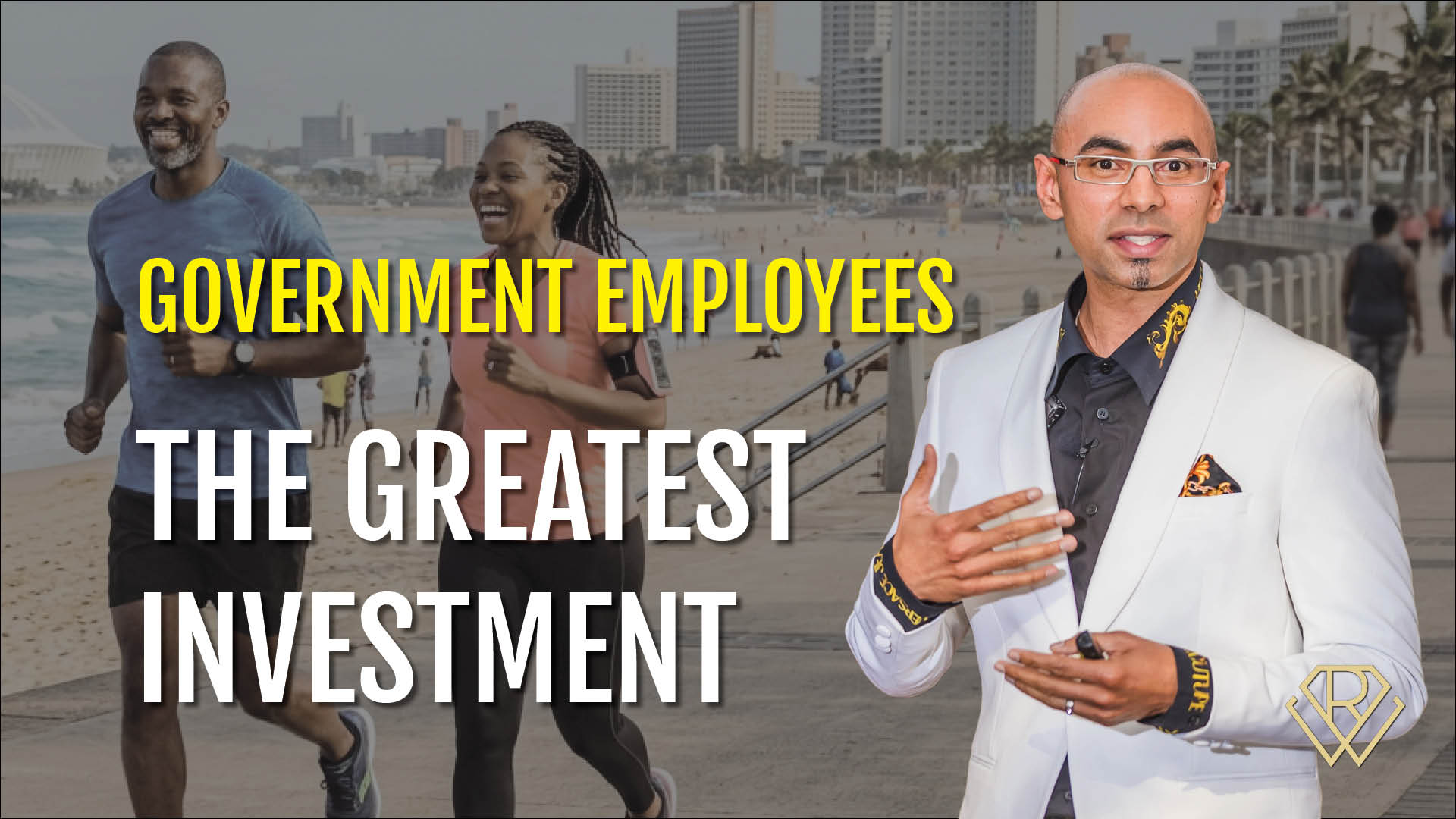
This article explains the five areas Dhevan began prioritising after that experience, and why health may be the greatest investment government employees can make.
Why Health Belongs in the Investment Conversation
Financial planning is designed to help government employees build security and enjoy greater choice in the future.
But financial security is only one part of a good life. Health, energy, relationships, time, and the ability to enjoy what you have built also matter.
Government employees can become so focused on completing the next task that personal wellbeing is delayed. Exercise can wait until next week. Family time can happen after the emails are finished. Rest can come after the project is completed.
The difficulty is that work rarely announces that it is finally finished.
Dhevan realised this after a busy period in which he was carrying several ideas, responsibilities, and unfinished projects at once. His body eventually forced him to stop.
The experience raised a deeper question: what is financial success worth if you are not healthy enough to enjoy it?
Number 1: Make Time for Gratitude
Gratitude can sound simple, but it can change how government employees experience an otherwise stressful day.
Work pressure often directs attention toward what is unfinished, difficult, or frustrating. You may complete several important tasks and still end the day thinking only about the items that remain.
Dhevan began setting aside time in the morning to reflect on what he could appreciate. He also started writing down three things in the evening that had happened during the day and made him feel grateful.
Those moments did not have to be dramatic.
They could include helping a government employee understand a difficult issue, spending meaningful time with family, or simply being more present during the day.
Gratitude does not mean pretending that challenges do not exist. It means remembering that the challenge is not the only thing present in your life.
When government employees practise gratitude consistently, the mind is given another place to focus. Stress may still exist, but it no longer has to dominate every thought.
A few minutes of gratitude can help you see the same day differently.
Number 2: Practise Mindfulness in Ordinary Moments
Mindfulness does not require a complicated routine.
It means paying attention to what is happening now instead of allowing the mind to remain trapped in unfinished work, future worries, or past frustrations.
Dhevan explains that mindfulness can happen while eating a meal, listening to a family member, watching a video, or simply taking a conscious breath.
The action itself may be ordinary. The difference is the quality of attention.
Consider how often meals happen in front of a television, computer, or phone. The food is eaten, but the moment is barely noticed.
The same can happen in relationships. A family member may be speaking while part of your attention is still on an email, a project, or the next responsibility.
Mindfulness asks you to return fully to the moment in front of you.
Government employees do not need hours of silence to begin. One mindful meal, one deep breath, or five minutes of full attention can be a useful starting point.
Being present is not wasted time. It is how you experience the life your work is supporting.
Number 3: Understand What Healthy Eating Means for You
Eating healthily involves more than choosing vegetables, fruit, and water.
Dhevan believed he already ate reasonably well. But after working with a mentor and completing blood tests, he discovered that his body had specific needs that were not obvious from general advice.
For example, his vitamin D level was low. The mentor used that information to recommend changes and structure an eating plan around his actual position.
The lesson is not that every government employee needs the same plan. It is that general assumptions are not always enough.
Some foods may appear healthy while containing more sugar than expected. Meals may also lack the fibre, nutrients, or balance needed to maintain energy through a demanding day.
The mentor helped Dhevan understand the purpose behind the foods in his routine. Oats helped him stay fuller for longer. Chia seeds and blueberries added nutritional value and fibre.
Understanding the reason behind the plan made it easier to follow.
Healthy eating becomes more sustainable when you understand what your body needs and why each habit matters.
Number 4: Schedule Exercise Like an Appointment
Knowing that exercise is important does not automatically create time for it.
Dhevan found that exercise kept being delayed because it did not have a protected place in his calendar. When the calendar looked open, work naturally filled the space.
He therefore blocked out time from 4:00 PM to 5:00 PM for exercise.
The exact time will not suit every government employee. The principle is what matters.
If an activity is important but never scheduled, it must compete with every email, meeting, household responsibility, and unfinished task.
A calendar creates a boundary. It tells your mind that this time already has a purpose.
Dhevan also worked with a fitness mentor who designed a routine around his current ability and goals. He wanted better health, flexibility, a leaner body, and enough energy to run and play with his children.
He did not want a programme built around extreme weights or unnecessary injury risk.
The plan started where he was, not where someone else thought he should be.
Your health is more likely to improve when exercise has a time, a purpose, and a plan suited to your present condition.
Number 5: Make Time for What You Love
The fifth area is easy to postpone because it may not appear productive.
Dhevan speaks about the effect of losing his mother and the reminder that life is short. None of us knows exactly how much time remains.
That does not mean every enjoyable activity must be expensive or dramatic.
It may be walking on the beach, spending time in nature, listening to music, playing a game, or sitting with family without a screen or unfinished task competing for attention.
For Dhevan, playing pool brings back positive memories of growing up and spending time with his brother. It is different from his normal work environment and gives him an activity he genuinely enjoys.
Government employees may also find parts of their work meaningful and fulfilling. The goal is not necessarily to escape work.
It is to identify what brings energy and what consistently drains it.
Some unwanted tasks may be delegated, simplified, automated, or handled more efficiently. That can create more room for the parts of work and life that feel worthwhile.
A secure future should include time for the activities and relationships that make the future worth reaching.
Your Next Step
If you have read this far, you are already thinking beyond products and returns.
You are considering what financial security is meant to support.
The full video adds Dhevan’s personal story, including the health warning that stopped his work, the calendar changes he made, and the five practical areas he is now developing.
It is not a call to make every change at once.
You may begin with five minutes of gratitude, a short walk, one meal without a screen, or a conversation in which a family member receives your full attention.
Watch the full video and register for The Retire vs Resign Masterclass™
The video will help you reconsider what the greatest investment means, while the masterclass can help you understand the wider planning principles government employees should consider before they retire or resign.
No panic. No fluff. Just the truth.
“`
Watch the full video and book your VIP consult:
Join The Retire vs Resign Masterclass™